Nine. But the Officer Might Ask Three More Questions About the Court Right After.
USCIS Question 39 asks how many justices serve on the Supreme Court. Here's the answer, the follow-up questions that cluster around it, and the one piece of context that makes all of them stick.
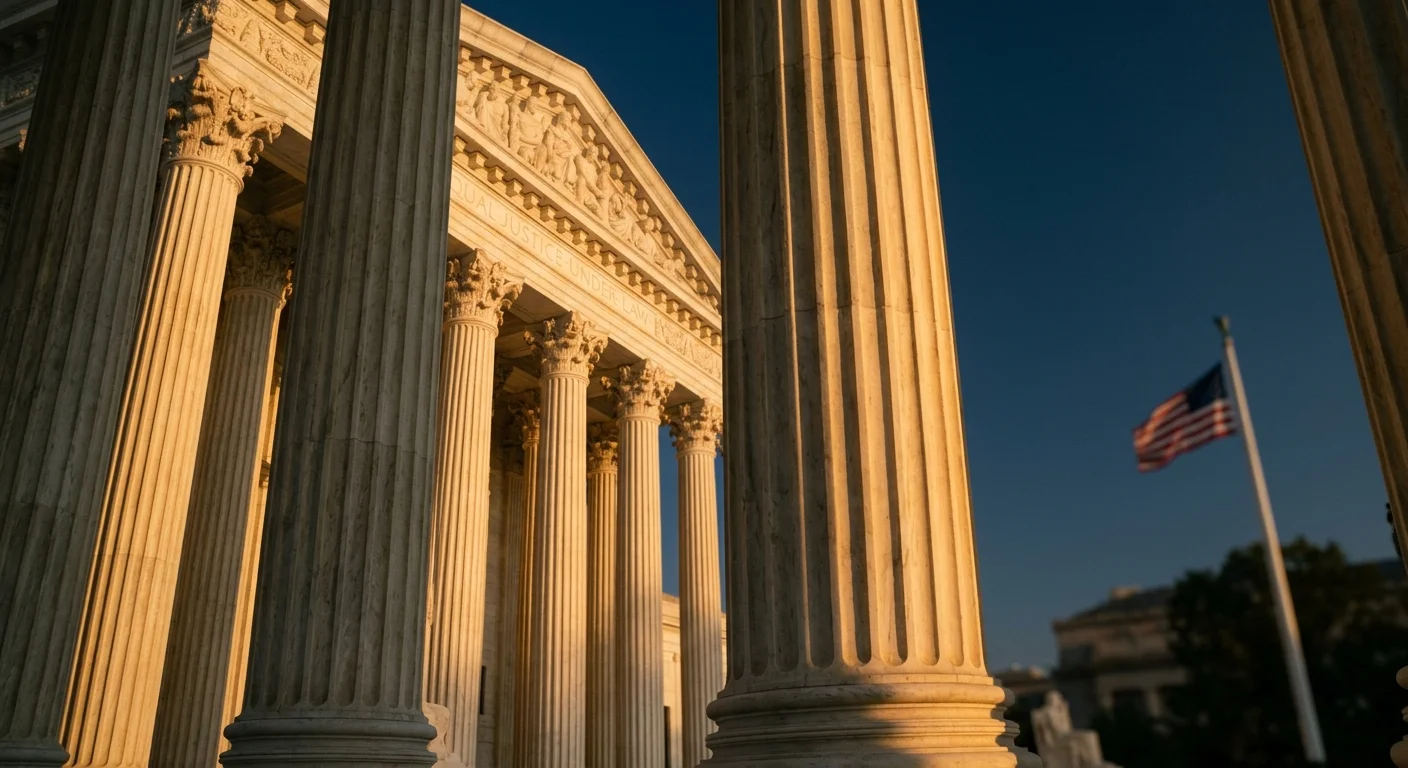
You've been going through the 128 questions for weeks. Some of them are genuinely hard. Some you've had cold since day three. And "how many justices are on the Supreme Court?" — you know this one.
Nine. Done.
But at your interview, the officer won't necessarily stop there. The Supreme Court questions on the civics test cluster together, and if you nail the first one, you might immediately hear the next. This article walks through all of them — with the official accepted answers and just enough context to make them impossible to forget.
The Direct Answer to USCIS Question 39
There are nine justices on the Supreme Court. One is the Chief Justice of the United States. The other eight are Associate Justices. All nine are appointed by the President and confirmed by the Senate. They serve for life — or until they choose to retire.
USCIS Question: How many justices are on the Supreme Court?
The Context That Makes It Stick
Here's the thing most study guides skip: nine is not a constitutional requirement. The Constitution never specifies how many justices must serve. Congress sets that number by law — and it has changed over time. The Court has had as few as five justices and as many as ten at different points in US history.
It has been nine since 1869. That's 155 years. The number feels permanent, but constitutionally it's a statute, not a mandate. Understanding this helps the question land differently — you're not just memorizing a number, you're understanding how the judicial branch was designed to be flexible within constitutional limits.
The National Constitution Center has a thorough breakdown of how Article III, which establishes the judicial branch, deliberately left the Court's structure to Congress — one of the many places the Founders chose flexibility over specificity.
The Questions That Come Right After
The Supreme Court generates several USCIS civics questions. Know all of them before your interview — officers sometimes follow one with another when they can tell you're comfortable.
USCIS Question: What is the highest court in the United States?
USCIS Question: What does the Supreme Court do?
USCIS Question: Who is the Chief Justice of the United States now?
The "Now" Question Rule
Pay attention to that last one. "Who is the Chief Justice now?" is what USCIS calls a "now" question — one where the answer depends on who currently holds the position. The same applies to the President, the Vice President, your state's governor and senators, and the Speaker of the House.
For the 2026 test: John Roberts has been Chief Justice since 2005 and remains in that role. But this answer can change, and if it does, USCIS updates the accepted answers on the official 2025 civics test page. Check it close to your interview date.
How the Supreme Court Fits Into the Bigger Picture
The Supreme Court questions connect directly to the broader three branches of government questions on the test. The Court is the judicial branch — the third branch, alongside Congress (legislative) and the President (executive). Its role in checking the other two is central to how the US government works, and several civics questions test whether you understand that relationship.
The Supreme Court's own website has a plain-language overview of its role and history. And if you want to go deeper on the full set of government questions — all 47 of the American Government questions on the test — our complete guide to USCIS civics questions about American government covers every one with official answers.
Quick Reference: All Supreme Court USCIS Answers
| USCIS Question | Accepted Answer(s) |
|---|---|
| What is the highest court in the US? | the Supreme Court |
| How many justices are on the Supreme Court? | nine (9) |
| Who is the Chief Justice now? | John Roberts (verify before your interview) |
| What does the Supreme Court do? | reviews laws; explains laws; resolves disagreements about laws; decides if a law goes against the Constitution |
A short list. But the officer asks one question at a time, and in the interview room, even a question you know can stall for a second when nerves hit. The gap between recognizing the right answer and saying it out loud — clearly, without hesitation — is real. That's exactly the gap that civics educators consistently find separates people who studied from people who practiced.
The free AI interview simulator at FutureCitizen.us asks you these questions one at a time, spoken out loud, exactly like the real interview. For the full 128-question breakdown, see our complete USCIS civics questions guide. It's not a flashcard — it's a rehearsal. If the Supreme Court questions are in your "I know this" pile, prove it under pressure. That's the only practice that counts.
You Know the Answer Is Nine. Can You Say It Without Hesitating?
Reading answers and giving them out loud in a timed interview are different skills. Our free AI officer asks the real USCIS civics questions one at a time — just like your naturalization interview. Find out which ones you have locked in and which ones need more reps.
Start Free Practice →